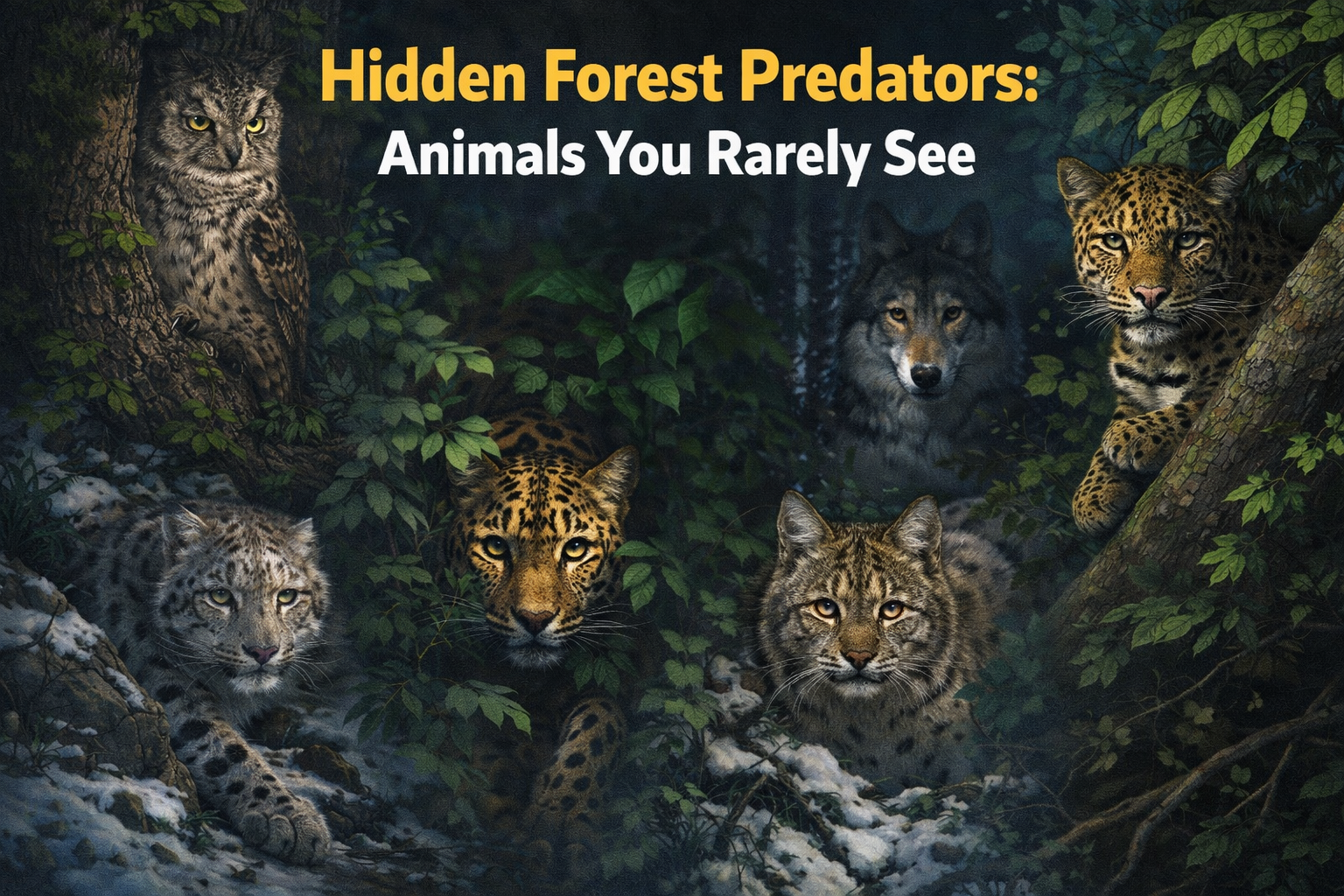
Forests are full of life, but not all creatures are easy to spot. Some of the most powerful and fascinating animals live quietly in the shadows, rarely seen by humans. These hidden forest predators play a crucial role in maintaining the balance of ecosystems, controlling prey populations, and keeping forests healthy.
In this article, we’ll explore some of these elusive hunters, why they’re so hard to find, and how they survive in the wild.
🌲 Why Are Some Forest Predators So Hard to See?
Many forest predators have evolved to remain hidden. Their survival depends on stealth, patience, and avoiding detection not just from prey, but also from humans.
Here’s why you rarely encounter them:
- Camouflage: Their fur or skin blends perfectly with trees, shadows, and forest floors
- Nocturnal behavior: Many hunt at night when visibility is low
- Solitary lifestyle: They prefer to live and hunt alone
- Avoidance of humans: Most predators stay far away from human activity
🐾 Top Hidden Forest Predators
1. Leopard

Leopards are masters of stealth. Found in forests across Africa and Asia, they are known for their ability to blend into their surroundings.
Key Traits:
- Exceptional climbing ability
- Spotted coat for camouflage
- Silent movement
Why you rarely see them:
They often rest in trees and hunt at night, staying completely hidden during the day.
2. Snow Leopard

Living in cold mountainous forests, the snow leopard is one of the most elusive animals in the world.
Key Traits:
- Thick fur for cold climates
- Powerful legs for jumping
- Long tail for balance
Why you rarely see them:
Their natural camouflage makes them almost invisible against rocky, snowy terrain.
3. Jaguar

The jaguar is a powerful predator found in dense forests of Central and South America.
Key Traits:
- Strong bite force
- Excellent swimmer
- Stealthy stalking behavior
Why you rarely see them:
They live in thick rainforests where visibility is low and human presence is limited.
4. Gray Wolf

Wolves are intelligent and social predators found in forests across North America, Europe, and Asia.
Key Traits:
- Strong pack coordination
- Keen sense of smell
- Long-distance communication (howling)
Why you rarely see them:
They avoid humans and move over large territories, making encounters rare.
5. Lynx

The lynx is a medium-sized wild cat known for its sharp ears and thick fur.
Key Traits:
- Silent movement
- Excellent hearing
- Thick coat for cold climates
Why you rarely see them:
They are extremely quiet and blend seamlessly into forest environments.
6. Owl

Owls are silent aerial predators that dominate the night skies of forests.
Key Traits:
- Silent flight
- Exceptional night vision
- Sharp talons
Why you rarely see them:
They are nocturnal and blend into tree bark during the day.
🌿 The Role of These Predators in Nature
Hidden predators are essential for maintaining ecological balance. They help:
- Control populations of smaller animals
- Prevent overgrazing of vegetation
- Support biodiversity
Without them, ecosystems can become unstable.
⚠️ Threats to Hidden Forest Predators
Despite their stealth, these animals face serious challenges:
- Deforestation destroying their habitats
- Poaching and illegal hunting
- Climate change affecting ecosystems
- Human expansion into forest areas
Protecting forests is crucial for their survival.
🌍 Final Thoughts
Hidden forest predators remind us that nature is full of mysteries. Even in places that seem quiet and empty, powerful hunters may be watching from the shadows.
Understanding and protecting these animals is not just about wildlife it’s about preserving the delicate balance of our planet’s ecosystems.