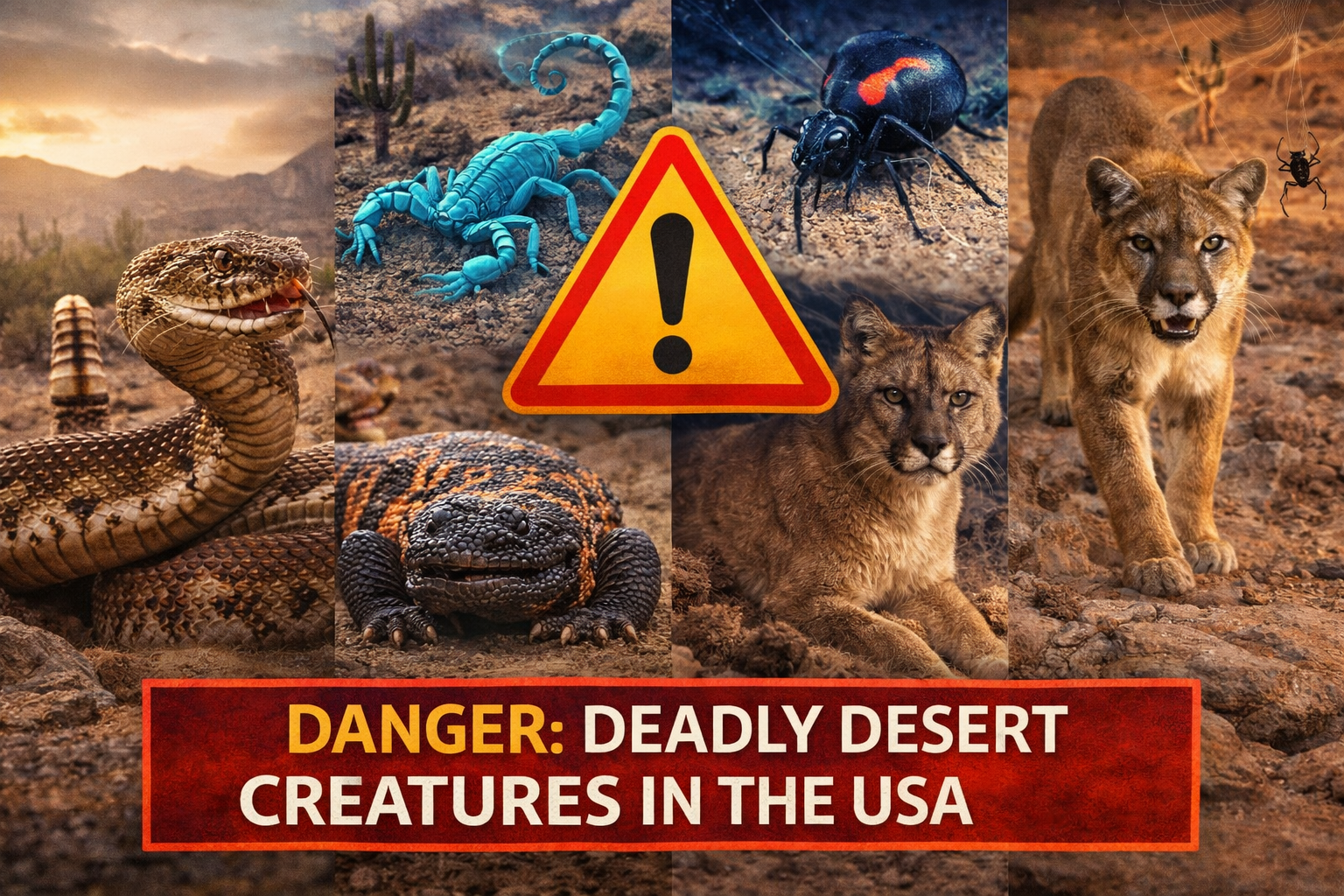
Deserts are some of the harshest environments on Earth, with scorching daytime temperatures, limited water, and little vegetation. Yet, many animals have adapted remarkably well to survive and even thrive in these extreme conditions.
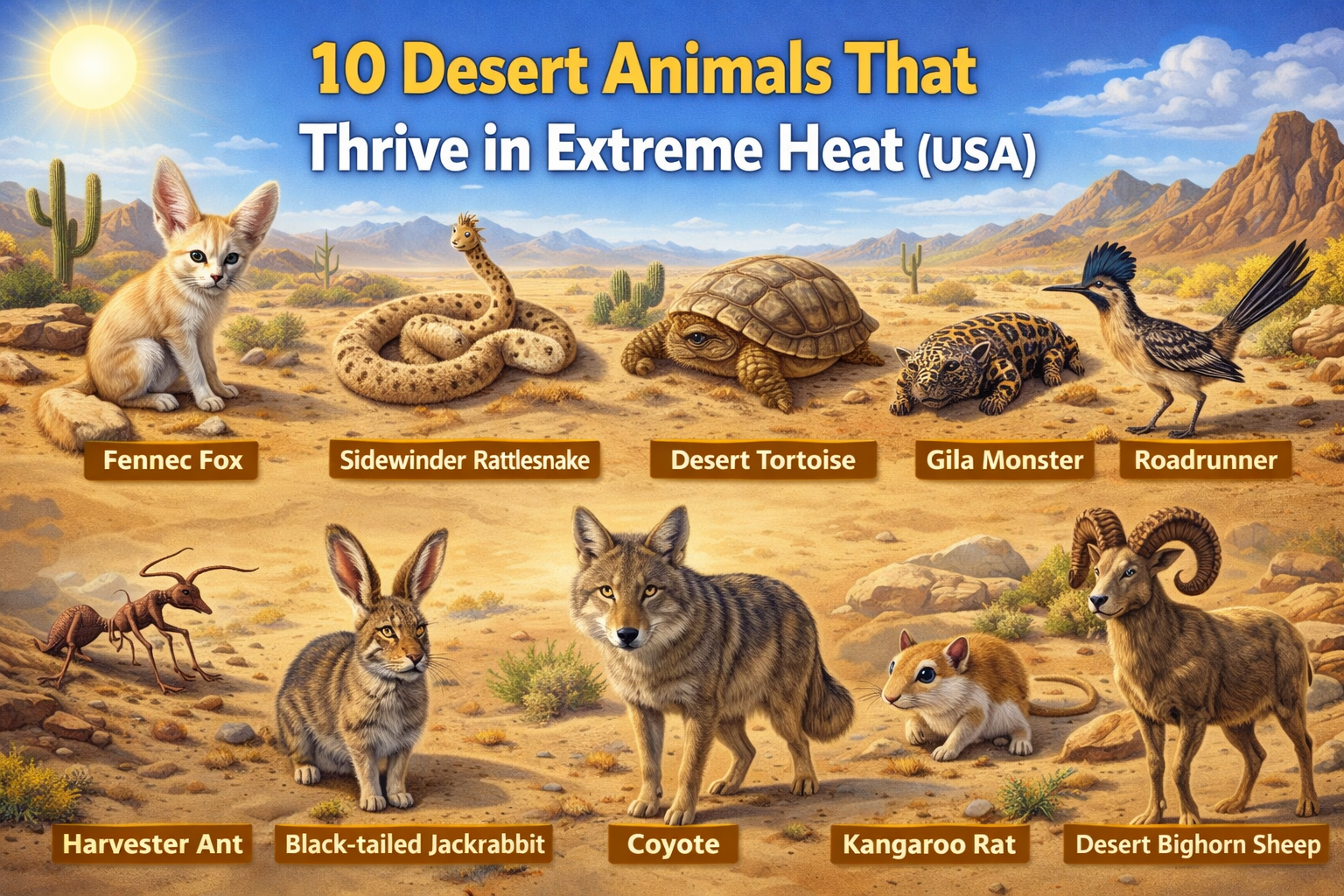
In the United States, deserts like the Mojave, Sonoran, and Chihuahuan are home to a variety of resilient species. This article explores 10 fascinating desert animals that have mastered survival in intense heat.
🌵 Why Desert Survival Is Challenging
Before we dive into the animals, it’s important to understand the conditions they face:
- Temperatures can exceed 45°C (113°F)
- Water is extremely scarce
- Shade and shelter are limited
- Food sources are unpredictable
To survive, desert animals rely on special adaptations such as conserving water, avoiding heat, and being active at night.
🐾 1. Fennec Fox
The fennec fox is known for its large ears, which help release body heat and keep it cool.
Adaptations:
- Large ears for heat dissipation
- Nocturnal lifestyle
- Thick fur protects against hot sand
🐍 2. Sidewinder Rattlesnake
This unique snake moves sideways to reduce contact with the hot ground.
Adaptations:
- Sidewinding motion to avoid heat
- Heat-sensing pits to detect prey
- Buries itself in sand during the day
🐢 3. Desert Tortoise
A true desert survivor, the desert tortoise can live without water for long periods.
Adaptations:
- Stores water in its body
- Spends most time in underground burrows
- Slow metabolism reduces energy needs
🦎 4. Gila Monster
One of the few venomous lizards in the world, the Gila monster thrives in hot desert regions.
Adaptations:
- Stores fat in its tail
- Spends up to 90% of its time underground
- Thick skin reduces water loss
🐦 5. Roadrunner
Famous for its speed, the roadrunner is a skilled hunter in desert environments.
Adaptations:
- Can run fast to catch prey
- Gains water from food instead of drinking
- Reduces activity during peak heat
🐜 6. Harvester Ant
These ants are incredibly tough and can tolerate extreme temperatures.
Adaptations:
- Active during hottest parts of the day
- Collect and store seeds for food
- Efficient water conservation
🐇 7. Black-tailed Jackrabbit
This desert hare uses its long ears to regulate body temperature.
Adaptations:
- Large ears release heat
- Powerful legs for escaping predators
- Mostly active at dawn and dusk
🐺 8. Coyote
Coyotes are highly adaptable animals found in many environments, including deserts.
Adaptations:
- Omnivorous diet (eats almost anything)
- Active during cooler hours
- Efficient water usage
🐭 9. Kangaroo Rat
This tiny rodent is one of the best examples of desert adaptation.
Adaptations:
- Never needs to drink water
- Gets moisture from seeds
- Powerful hind legs for jumping
🐏 10. Desert Bighorn Sheep
These strong animals live in rocky desert mountains.
Adaptations:
- Can go long periods without water
- Excellent climbing ability
- Thick coat protects from temperature extremes
🌞 How These Animals Survive Extreme Heat
Desert animals use several strategies to survive:
- Nocturnal behavior: Active at night to avoid heat
- Burrowing: Staying underground during the day
- Water conservation: Minimal water loss
- Heat resistance: Special body features to handle high temperatures
🌍 Importance of Desert Ecosystems
Even though deserts seem barren, they are full of life. These animals play important roles by:
- Maintaining food chains
- Controlling insect populations
- Supporting biodiversity
Protecting desert ecosystems is essential for preserving these unique species.
✍️ Final Thoughts
The deserts of the United States may appear harsh and unforgiving, but they are home to some of the most adaptable creatures on Earth. From tiny ants to powerful predators, each animal has developed unique strategies to survive extreme heat.
Learning about these animals not only deepens our appreciation for nature but also highlights the incredible resilience of life in even the toughest environments.