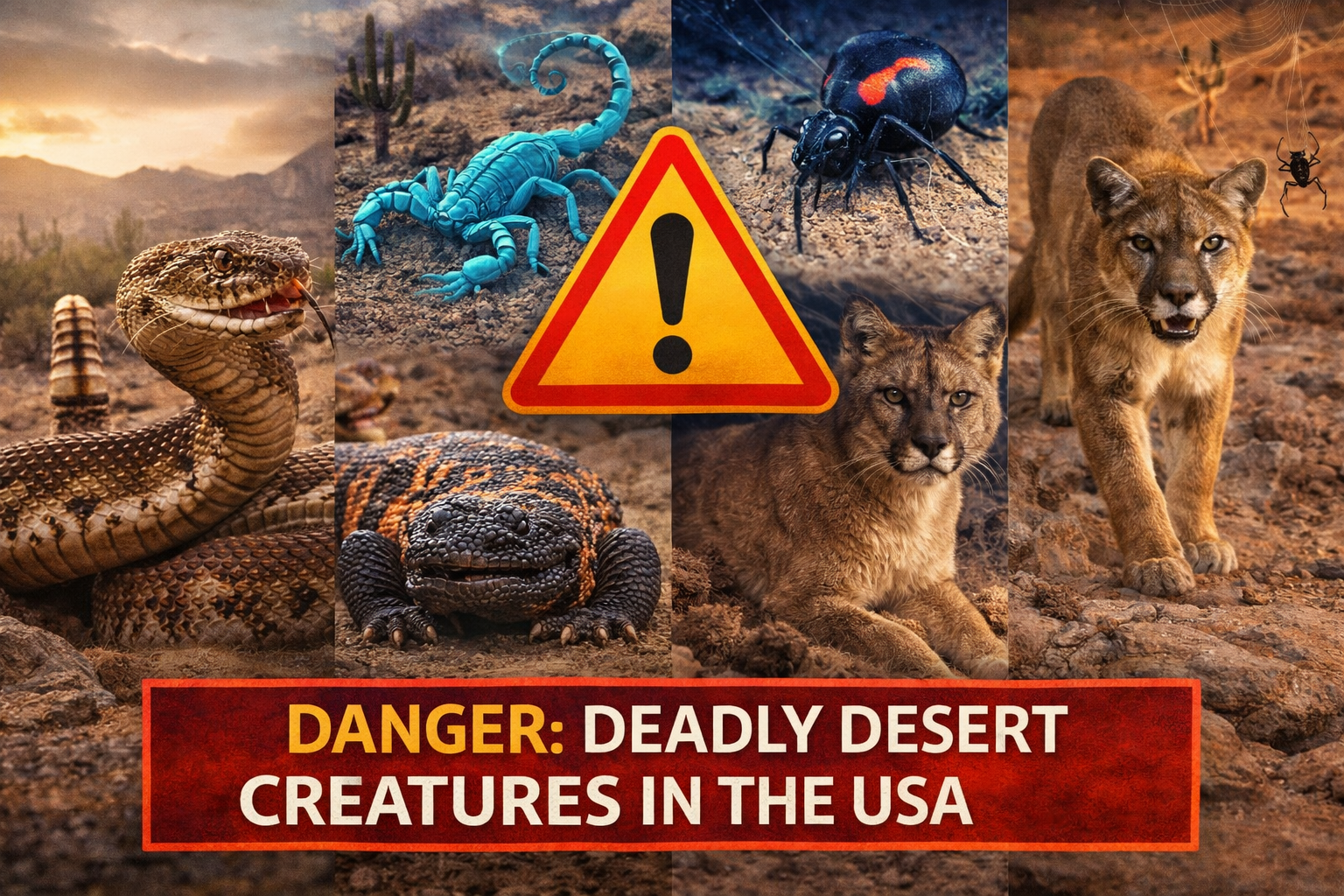
The deserts of the United States like those in Arizona, Nevada, California, and New Mexico are harsh yet fascinating ecosystems. While they may appear quiet and empty, they are actually home to a wide range of wildlife, including some dangerous and potentially deadly creatures.
Whether you’re hiking, camping, or exploring, knowing which animals to avoid can keep you safe. This guide covers the most dangerous desert creatures in the USA and how to stay protected.
1. Rattlesnake
Rattlesnakes are among the most well-known venomous snakes in North America.
- Where found: Rocky deserts, trails, under bushes
- Danger: Venomous bite that can be life-threatening
- Warning sign: Distinct rattling sound
Safety Tip: Always watch where you step and never try to handle one.
2. Gila Monster
The Gila monster is one of the only venomous lizards in the world.
- Where found: Southwestern deserts
- Danger: Venomous bite with strong grip
- Behavior: Slow-moving but defensive
Fun Fact: They store fat in their tails to survive long periods without food.
3. Arizona Bark Scorpion
This small scorpion is considered the most venomous in the United States.
- Where found: Under rocks, tree bark, and homes
- Danger: Painful sting; can be serious for children and elderly
- Special trait: Glows under ultraviolet light
Safety Tip: Shake out shoes and clothing before wearing them.
4. Black Widow Spider
Recognizable by the red hourglass marking on its abdomen, this spider is highly venomous.
- Where found: Dark, sheltered areas like woodpiles
- Danger: Neurotoxic venom causing severe pain and muscle cramps
- Behavior: Bites only when threatened
Tip: Wear gloves when moving rocks or wood.
5. Brown Recluse Spider
Another dangerous spider known for its necrotic venom.
- Where found: Hidden indoor and outdoor spaces
- Danger: Can cause skin tissue damage
- Identification: Violin-shaped marking on its back
Note: Bites are rare but should be treated immediately.
6. Mountain Lion (Cougar)
A powerful predator that lives in desert and mountainous regions.
- Where found: Rocky desert terrains
- Danger: Rare but potentially fatal attacks
- Behavior: Stealthy and elusive
Safety Tip: Never run—maintain eye contact and make yourself appear larger.
7. Coyote
Coyotes are common in desert regions and are usually not aggressive toward humans.
- Where found: Open desert and near urban edges
- Danger: Can attack pets or, rarely, humans
- Behavior: Opportunistic feeders
Tip: Do not feed coyotes; it makes them less fearful of humans.
8. Tarantula
Though large and intimidating, tarantulas are less dangerous than they appear.
- Where found: Burrows in desert soil
- Danger: Mild venom; hairs can irritate skin
- Behavior: Generally harmless unless provoked
Fun Fact: Male tarantulas wander in search of mates during certain seasons.
9. Fire Ants
These aggressive ants are often overlooked but can be dangerous in groups.
- Where found: Sandy soil and mounds
- Danger: Painful stings causing allergic reactions
- Behavior: Attack in large numbers when disturbed
Tip: Avoid stepping on ant mounds.
10. Desert Centipede
A fast-moving predator with venomous legs.
- Where found: Under rocks, logs, and debris
- Danger: Painful venomous bite
- Behavior: Aggressive when threatened
Warning: Always check under rocks before placing your hands.
Final Thoughts
Desert environments are full of unique and fascinating wildlife, but they also come with risks. Most of these creatures are not aggressive unless provoked, but understanding their behavior is key to staying safe.
Safety Tips for Desert Exploration:
- Wear protective clothing and boots
- Avoid reaching into hidden spaces
- Stay alert, especially at night
- Carry a first aid kit
- Respect all wildlife and keep your distance
By being informed and cautious, you can safely explore the beauty of the desert while avoiding dangerous encounters.