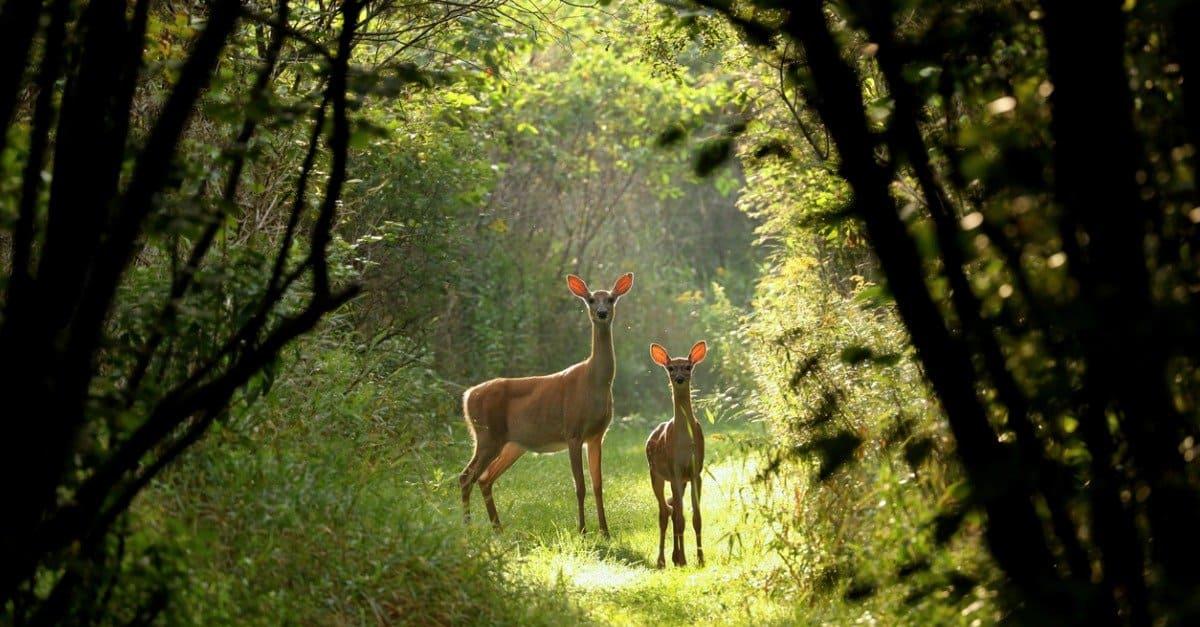
The forests of the United States are rich, diverse ecosystems filled with wildlife that can often be seen even on a simple walk or hike. From towering pine forests in the north to dense woodlands in the east, these habitats are home to many animals that are both fascinating and relatively easy to spot.
If you’re a beginner wildlife watcher, hiker, or nature lover, this guide will introduce you to common forest animals in the USA that you can easily see in their natural habitat.
1. White-Tailed Deer
The white-tailed deer is one of the most commonly seen animals in American forests.
- Where to find: Forest edges, clearings, suburban woodlands
- Best time to spot: Early morning or dusk
- Behavior: Gentle, alert, often seen grazing
Fun Fact: When startled, they raise their white tail as a warning signal to other deer.
2. Raccoon
Raccoons are highly adaptable and are often found near both forests and urban areas.
- Where to find: Hollow trees, near water sources
- Best time to spot: Night (nocturnal)
- Behavior: Curious, intelligent, and great climbers
Tip: Look for them near streams or campsites where food may be available.
3. American Black Bear
The American black bear is widespread across many forest regions in the USA.
- Where to find: Dense forests, mountainous woodlands
- Best time to spot: Early morning or late evening
- Behavior: Generally shy but powerful
Safety Note: Always keep a safe distance and never feed wild bears.
4. Red Fox
The red fox is a beautiful and agile predator often seen in forest clearings.
- Where to find: Forest edges, open woodland areas
- Best time to spot: Dawn and dusk
- Behavior: Quick, quiet, and highly alert
Fun Fact: Foxes use their bushy tails for balance and warmth.
5. Eastern Gray Squirrel
One of the most familiar animals in American forests and parks.
- Where to find: Trees in forests, parks, and neighborhoods
- Best time to spot: Daytime
- Behavior: Active, playful, always searching for food
Highlight: They bury nuts and seeds, helping forests grow.
6. Great Horned Owl
This powerful bird of prey is often heard before it is seen.
- Where to find: Dense forests and wooded areas
- Best time to spot: Night
- Behavior: Silent hunter with excellent vision
Tip: Listen for their deep hooting sounds in the evening.
7. Wild Turkey
Wild turkeys are surprisingly common in many forested regions.
- Where to find: Open forests and grassy clearings
- Best time to spot: Morning and late afternoon
- Behavior: Usually seen in groups, walking on the ground
Fun Fact: They can fly short distances despite their size.
8. Striped Skunk
Known for its distinctive black-and-white stripes, the skunk is easy to identify.
- Where to find: Forest edges, burrows, and brush areas
- Best time to spot: Night
- Behavior: Slow-moving but defensive
Warning: Keep your distance—they spray as a defense mechanism.
9. North American Beaver
Beavers are fascinating animals known for building dams and lodges.
- Where to find: Forest streams, rivers, and ponds
- Best time to spot: Evening
- Behavior: Busy builders and excellent swimmers
Highlight: Their dams create wetlands that benefit many other species.
10. Chipmunk
Small, fast, and adorable, chipmunks are commonly seen darting across forest floors.
- Where to find: Woodlands, near rocks and logs
- Best time to spot: Daytime
- Behavior: Energetic and quick
Fun Fact: Chipmunks store food in their cheek pouches.
Final Thoughts
Exploring forests in the USA offers an incredible opportunity to connect with nature and observe wildlife up close. These animals are not only common but also play essential roles in maintaining the balance of forest ecosystems.
Tips for Spotting Forest Animals:
- Stay quiet and move slowly
- Visit during early morning or dusk
- Avoid sudden movements
- Respect wildlife and keep a safe distance
With a little patience and awareness, you’ll be surprised at how many of these animals you can easily spot on your next forest adventure.